Table of Contents Show
Rooftop solar photovoltaic (PV) arrays come with 25-year module production warranties. That long window leads many property owners to treat panels as maintenance-free hardware. In real-world operation, continuous atmospheric exposure, thermal expansion, glass contamination, and electrical wear reduce power generation year after year.
According to long-term operational research conducted by the National Renewable Energy Laboratory (NREL), solar modules naturally degrade at an average rate of 0.5% per year under ideal conditions. However, unaddressed environmental grime and undetected electrical faults double or triple that loss rate, silently draining system output and shortening component lifespan.
Environmental Weathering and Glass Contamination
Roof modules take the brunt of severe weather every day. Hail, freezing moisture, intense ultraviolet radiation, and sharp temperature swings test panel seals continuously. Pollen, soot, tree sap, bird droppings, and coastal salt spray stick to the tempered glass surface, forming a stubborn film that standard rain showers cannot wash away.
Physical surface blockage damages solar arrays in three distinct ways:
- Hotspot Cell Damage: Opaque debris blocks sunlight to specific silicon cells inside a series string. Shaded cells stop producing power and turn into electrical resistors to current coming from active neighboring cells. The resulting heat spike can exceed 150°C, causing micro-fractures in silicon wafers and scorching the protective backsheet.
- Corrosion at Frame Joints: Dirt collects against the lower lip of aluminum frames. In freezing weather, trapped water expands against glass seals, letting moisture reach internal copper traces over time.
- Battery Storage Charge Rates: Homes equipped with sustainable energy storage advances require peak DC output from rooftop panels to top off lithium batteries during shorter daylight hours.
Core Diagnostic Checkpoints for Homeowners
A thorough solar evaluation looks far beyond a basic visual scan from the driveway. Field technicians use diagnostic gear to audit six main failure zones:
- Module Condition: Technicians inspect tempered glass for anti-reflective coating peeling, frame distortion, and loose mounting clamps caused by roof vibration.
- Inverter Health: Inverters handle heavy DC-to-AC power conversion daily. Inspection covers cooling fan function, heat sink dust levels, internal capacitor wear, and error log reviews.
- DC Isolation Switches: High DC voltage running through mechanical switches can form hot electrical arcs if contacts loosen over time. Checks verify internal terminal tightness and rubber weather seals.
- DC Wiring Insulation: Technicians follow safety guidelines established under IEC standards for PV testing. Using a megohmmeter set to 500V DC, they measure insulation resistance between conductors and earth frames. Readings under 1 MΩ indicate cable skin damage from tile friction or animal chewing.
- Roof Anchors and Flashings: Racking checks ensure lag screws remain tight into roof rafters and flashing boots stay watertight.
- System Grounding: Testing checks earthing clamps and surge protective devices (SPDs) to ensure lightning spikes vent to ground safely.
Early Identification of Thermal and Electrical Faults
Minor electrical issues rarely trip household circuit breakers right away. A pinched wire resting on a metal racking rail may leak tiny amounts of current only during damp morning conditions, lowering array voltage while creating shock hazards for roof workers.
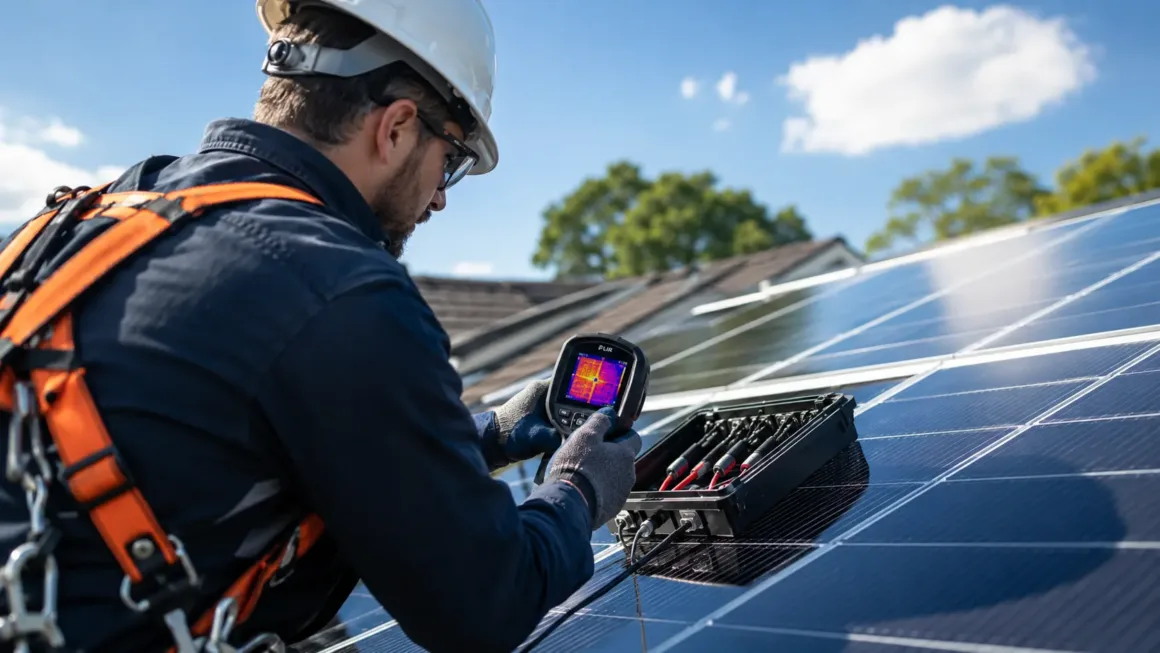
Thermal imaging cameras detect these hidden issues during full daylight operation. Infrared scans reveal hot bypass diodes, high-resistance wire splices, and imbalanced string currents long before component charring occurs. Homeowners who schedule routine diagnostic checks—such as a dedicated ServiceMy health check—can identify worn switch terminals or cable faults early, preventing expensive emergency inverter replacements down the road.
These preventive testing habits align with wider advancements in emerging building technologies, where hands-on diagnostics work alongside smart monitoring sensors to extend residential energy asset lifespan.
Inverter Setup Comparison: String Inverters vs. Microinverters
Solar maintenance needs vary depending on system hardware architecture. Understanding your equipment type helps plan the right inspection schedule:
| System Feature | String Inverter System | Microinverter System |
|---|---|---|
| Unit Location | Wall-mounted near main switchboard or garage. | Mounted under individual panels on the roof. |
| DC Voltage Hazard | High DC voltage (300V to 600V DC). | Low DC voltage per panel (converted to AC on roof). |
| Common Failure Points | Internal capacitor wear, fan dust, heat buildup. | Roof heat exposure, connector moisture ingress. |
| Inspection Access | Easy eye-level testing on wall unit. | Requires roof ladder access for hands-on checks. |
| Recommended Service | Filter cleaning and terminal checks every 1–2 years. | Software monitoring plus physical roof checks every 2–3 years. |
Protecting Financial Returns and Warranty Validity
A hidden 12% output drop caused by dirty glass or loose terminal screws forces households to purchase replacement electricity from the grid every month. That unaccounted power loss steadily ruins original payback calculations.
Routine system service protects household energy budgets through three practical avenues:
- Sustained Generation Yields: Clean glass and tight electrical connections maintain peak output through summer heat waves and low winter sunlight angles.
- Warranty Protection: Panel manufacturers require written maintenance records when evaluating claims for unexpected power drops or hardware failures. Lacking service logs can invalidate warranty coverage.
- Longer Inverter Lifespan: Inverters run 10 to 12 years on average. Clearing dust from cooling vents and keeping working temperatures low adds years of reliable operation.
Electrical Safety and Fire Risk Mitigation
Home solar arrays carry continuous direct current from roof modules down to wall isolators. Unlike household AC power, high-voltage DC electricity forms sustained arcs across small gaps if contacts come loose under load.
Regular maintenance checks verify that emergency rapid shutdown switches, roof isolators, and AC breakers trip instantly during grid outages. Keeping your array inspected ensures full compliance with local electrical safety standards and protects property against fire risks.
Frequently Asked Questions
How often should a home solar array be inspected?
Schedule a professional electrical and structural check every 12 to 24 months. Homeowners should also do a visual check from ground level twice a year to look for heavy soiling, debris buildup, or storm damage.
Is rain enough to keep solar panels clean?
Rain rinses off light dust but cannot remove sticky tree sap, bird droppings, or soot. These baked-on spots require gentle manual washing with soft brushes and purified water.
What are the signs that a solar inverter needs attention?
Watch for red or yellow error lights, loud fan noise, excessive housing heat, frequent breaker trips, or unexpected dips on daily generation charts.
Can solar array maintenance prevent roof leaks?
Yes. Maintenance includes checking lag bolts, tile hooks, and rubber flashing boots around roof penetrations. Catching cracked seals early stops water from leaking into attic spaces.
What tools are used during a professional solar check?
Technicians use thermal imaging cameras for cell hotspots, megohmeters for insulation checks, DC clamp meters for string current readings, and torque wrenches for mounting bolts.
Conclusion
Periodic maintenance keeps residential solar arrays safe, efficient, and profitable throughout their service life. While solar panels are tough, high-voltage switches, inverter electronics, and roof mount seals need periodic expert care.
Arranging routine service ensures small technical issues are corrected before power generation drops. Taking a hands-on approach to solar care guarantees clean energy savings for your home year after year.
Author & Editorial Review
Author: Perla Irish serves as Content Manager at UKHCABlog. She specializes in residential interior styling, botanical home decor, and practical plant care, helping homeowners create functional, green living spaces.
Editorial Review: Reviewed by UKHCABlog Editorial Team for structural accuracy, home safety standards, and sustainable living recommendations.